1. Trust Isn’t Earned Through Perfection
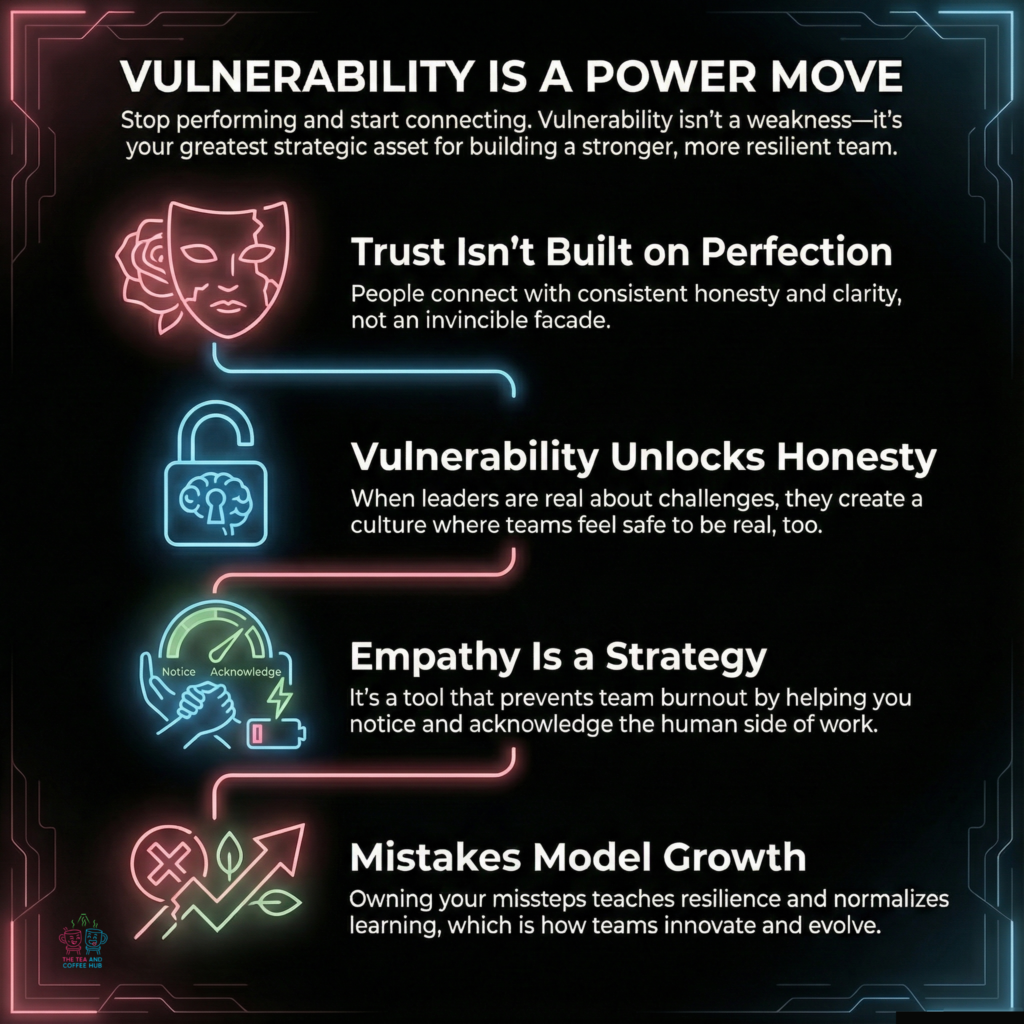
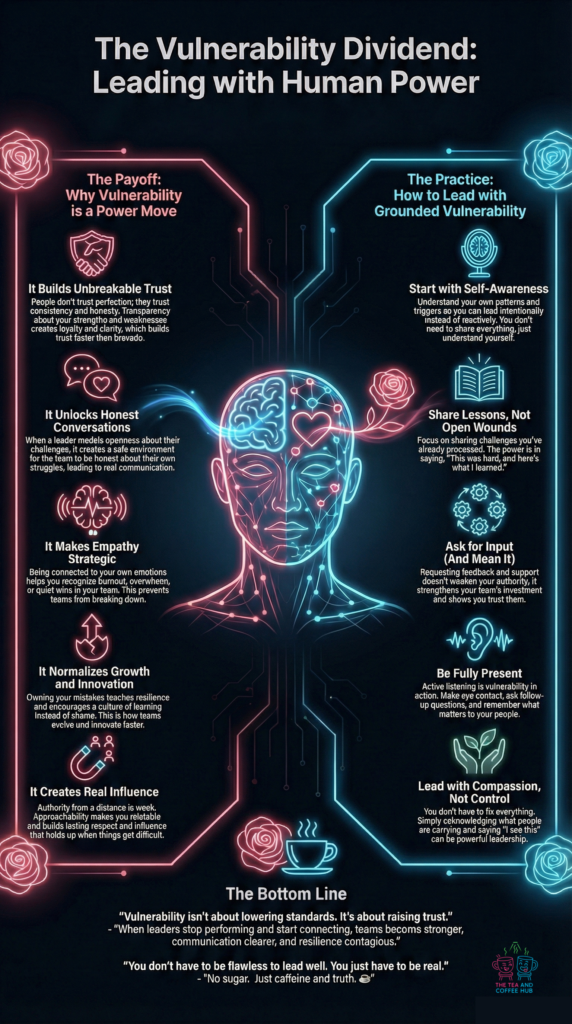
People don’t trust leaders who act invincible. They trust leaders who are consistent, honest, and real.
When you’re open about your strengths and your blind spots, your team knows what they’re working with. That transparency creates loyalty, not doubt. No guessing. No posturing. Just clarity.
And clarity builds trust faster than bravado ever could.
2. Vulnerability Gives Permission for Honest Conversations
If you’re never honest about your challenges, don’t expect your team to be.
Leaders set the emotional temperature. When you show up willing to say, “Here’s what I’m navigating,” you create a culture where people feel safe saying, “Here’s what I’m struggling with.”
That’s where real communication lives. Not in polished updates. In honest ones.
3. Empathy Isn’t Soft — It’s Strategic
Vulnerable leaders don’t just manage tasks. They notice people.
When you’re connected to your own emotions, you’re better at recognizing what’s happening with your team, burnout, overwhelm, hesitation, quiet wins that deserve acknowledgment.
Empathy doesn’t slow teams down. It keeps them from breaking.
4. Growth Looks Better When It’s Modeled
Pretending you never mess up teaches your team to hide mistakes.
Owning your missteps teaches resilience.
When you say, “Here’s where I got it wrong and what I learned,” you normalize learning instead of shame. That’s how teams evolve. That’s how innovation actually happens.
Growth isn’t clean. Leaders who admit that create teams that move faster, not slower.
5. Real Leaders Are Approachable, Not Untouchable
Authority doesn’t come from distance. It comes from respect.
Vulnerability makes you relatable without undermining your role. It tells your team, “I’m human, not unreachable.” That approachability builds influence, the kind that lasts when things get messy.