Cultivating a Culture of Innovation Without Burning People Out
How Leaders Spark Creativity Without Burning People Out
Let’s clear something up right away:
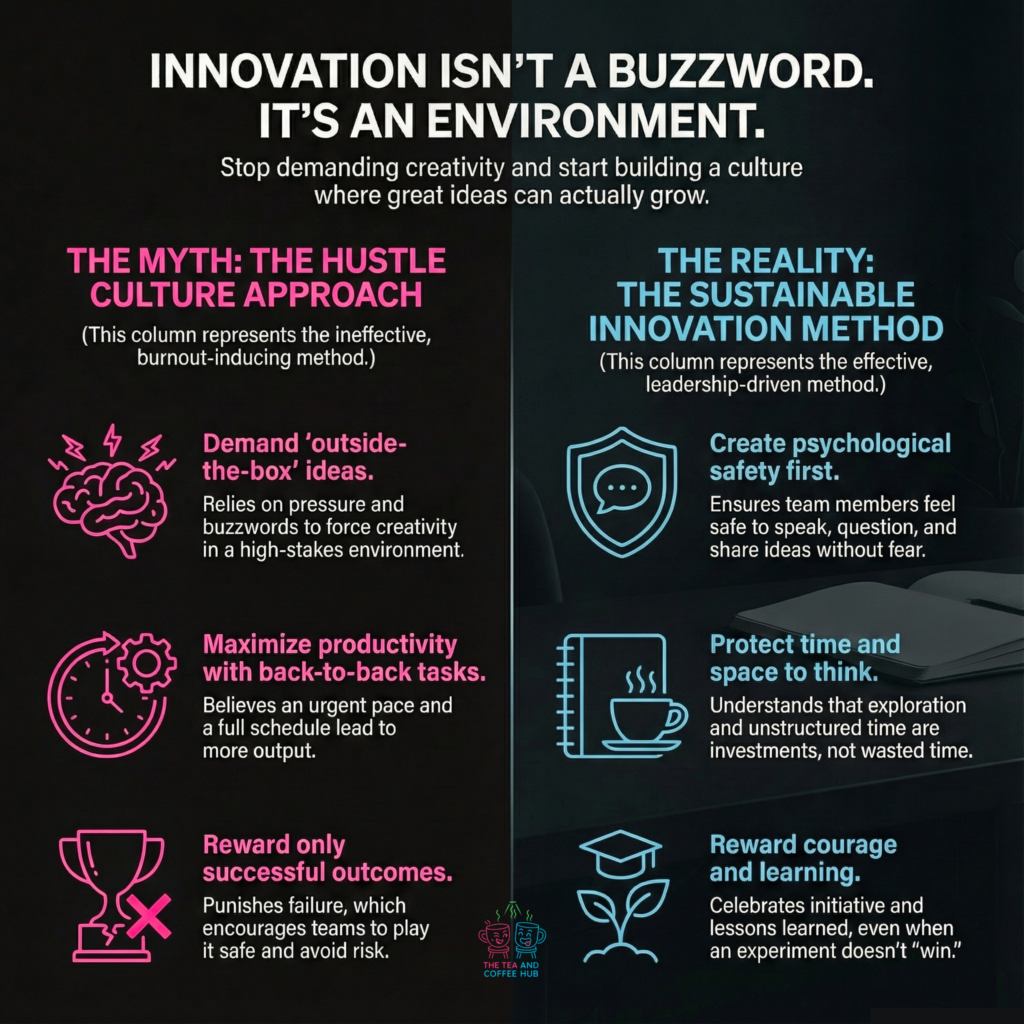
Innovation isn’t a beanbag chair, a whiteboard full of sticky notes, or yelling “think outside the box” while everyone quietly panics.
Innovation is a leadership environment.
In a world where markets shift overnight, attention spans are fried, and burnout is basically a personality trait, innovation isn’t optional, it’s survival. And no, it doesn’t come from pressure, hustle, or pretending you have all the answers.
It comes from leaders who know how to create psychological safety, permission to experiment, and clarity without control.
This isn’t about chaos for the sake of creativity.
It’s about building a culture where ideas are allowed to breathe, and actually turn into progress.
Let’s talk about how to do that without losing your people (or your mind).
Why Innovation Is a Leadership Skill, Not a Department
1. Staying Competitive Without Chasing Every Shiny Thing
Innovation isn’t about doing everything new.
It’s about doing the right things differently.
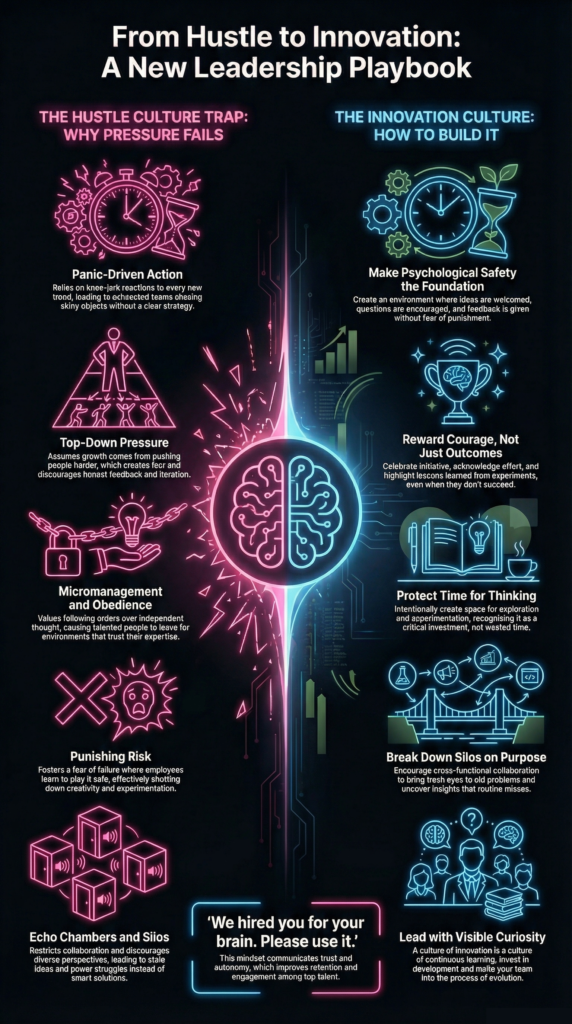
Leaders who foster innovation don’t knee-jerk react to trends. They teach teams how to think critically, test smartly, and adapt intentionally. That’s how businesses stay relevant without becoming exhausted trend-chasers.
Progress beats panic. Every time.
2. Growth Comes From Evolution, Not Pressure
The fastest-growing businesses aren’t the loudest.
They’re the ones constantly asking:
“What’s working?”
“What’s not?”
“What are we brave enough to try next?”
Innovation-driven leaders normalize iteration. They understand that improvement comes from movement, not perfection. That mindset turns ideas into momentum, and momentum into results.
3. Talented Humans Want Room to Think
Top talent doesn’t want micromanagement.
They want trust, autonomy, and respect.
A culture of innovation tells your team:
“We hired you for your brain. Please use it.”
When people feel safe contributing ideas instead of defending themselves, retention goes up, engagement improves, and you stop losing good humans to environments that value obedience over insight.
4. Collaboration Thrives When Difference Is Welcome
Innovation doesn’t happen in echo chambers.
When leaders invite diverse perspectives, different backgrounds, brains, experiences, and working styles, solutions get smarter. Collaboration becomes a strength instead of a power struggle.
Different viewpoints aren’t a threat to leadership.
They’re fuel for better decisions.
How to Actually Build a Culture of Innovation (No Buzzwords Required)
1. Make It Safe to Speak Before You Ask for Ideas
If people are afraid of being dismissed, mocked, or punished for honesty, creativity shuts down.
Set the tone clearly:
Ideas are welcome here.
Questions are encouraged.
Feedback isn’t career suicide.
Open communication isn’t about agreeing with everything.
It’s about listening without defensiveness.
2. Break the Silos on Purpose
Innovation doesn’t live in job descriptions.
Encourage cross-functional collaboration. Let people step outside their lane occasionally. Fresh eyes see things routine misses.
Some of the best ideas come from someone asking,
“Why do we do it this way?”
And actually being heard.
3. Give People Time to Think (Yes, Really)
If every minute is booked and every task is urgent, creativity starves.
Leaders who value innovation protect thinking time. They allow experimentation. They understand that exploration isn’t wasted time — it’s investment.
If you want new ideas, you have to create space for them to exist.
4. Reward Courage, Not Just Outcomes
Not every idea will work. That’s the point.
Celebrate initiative. Acknowledge effort. Highlight lessons learned — even when the result wasn’t a win.
When leaders punish risk, teams learn to play it safe.
When leaders reward learning, teams learn to grow.
5. Keep Learning Loud and Visible
Curious leaders build curious teams.
Invest in development. Encourage skill-building. Share what you’re learning. Stay connected to what’s changing in your industry — and invite your team into that evolution with you.
A culture of innovation is really just a culture of continuous learning with permission to adapt.
Final Sip
Innovation doesn’t come from pressure-cooker leadership or performative brainstorming sessions.
It comes from trust.
From clarity.
From leaders who are confident enough to not have all the answers — and wise enough to invite others into the process.
Build an environment where people feel safe to think, brave enough to try, and supported enough to grow.
That’s how progress actually happens.
No fluff.
Just caffeine, clarity, and action.
☕