Leading with Emotional Intelligence

Why the Best Leaders Aren’t the Loudest in the Room

Let’s get something straight right out of the gate.
Emotional Intelligence in Leadership in 2026 isn’t about barking orders, flexing titles, or pretending you’re “unbothered.”

It’s about emotional intelligence.
And no, that doesn’t mean being soft. It means being aware.

Emotional intelligence (EQ) is your ability to read the room, regulate yourself, and lead humans like… well, humans. Not KPIs with legs. Not Slack avatars. Real people with nervous systems, lives, and limits.

If you want a team that actually performs instead of quietly burning out, EQ isn’t optional anymore. It’s the job.

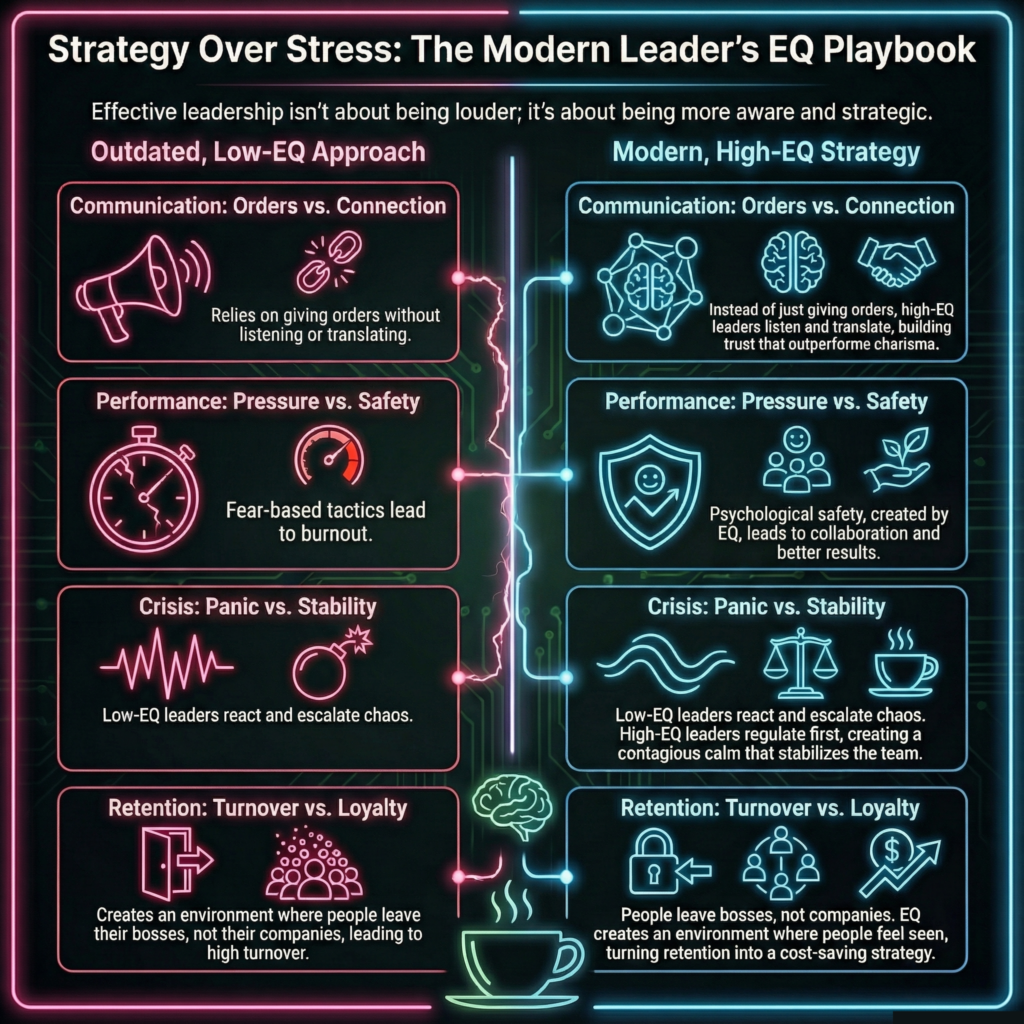
Side-by-side infographic comparing outdated low-EQ leadership with modern high-EQ leadership, showing differences in communication, performance, crisis response, and employee retention. The modern EQ approach emphasizes connection, psychological safety, calm leadership, and loyalty.

Why Emotional Intelligence Is a Leadership Power Move

1. Communication That Lands (Not Just Sounds Good)

High-EQ leaders don’t just talk. They translate.

They notice when silence means confusion.
They recognize when defensiveness is really fear.
They adjust tone instead of escalating tension.

That’s how trust gets built. And trust beats charisma every time.

2. Better Performance Without the Whiplash

Teams don’t thrive under pressure alone. They thrive under psychological safety.

Emotionally intelligent leaders understand group dynamics. They can de-escalate stress, redirect energy, and create momentum without fear tactics.

Result?
More collaboration. Less drama. Way better output.

3. Calm in Chaos Is a Skill, Not a Personality Trait

Change happens. Markets shift. Stuff breaks.

Leaders with strong EQ don’t spiral or lash out when things go sideways. They regulate first, then respond.

That steadiness becomes contagious. Your team doesn’t need you to have all the answers. They need you not to panic.

4. People Stay Where They Feel Seen

Here’s the unglamorous truth about retention:
People don’t leave companies. They leave environments where they feel invisible, dismissed, or constantly on edge.

Leaders who lead with emotional intelligence create cultures where people feel respected, supported, and trusted to grow.

That’s not fluff. That’s cost-saving strategy.

5. Smarter Decisions, Fewer Messes

When you factor emotions into decisions, you don’t weaken them. You strengthen them.

EQ allows leaders to see ripple effects before they happen. It helps you anticipate resistance, weigh perspectives, and avoid decisions that look good on paper but blow up in practice.

Logic + empathy is where real leadership lives.
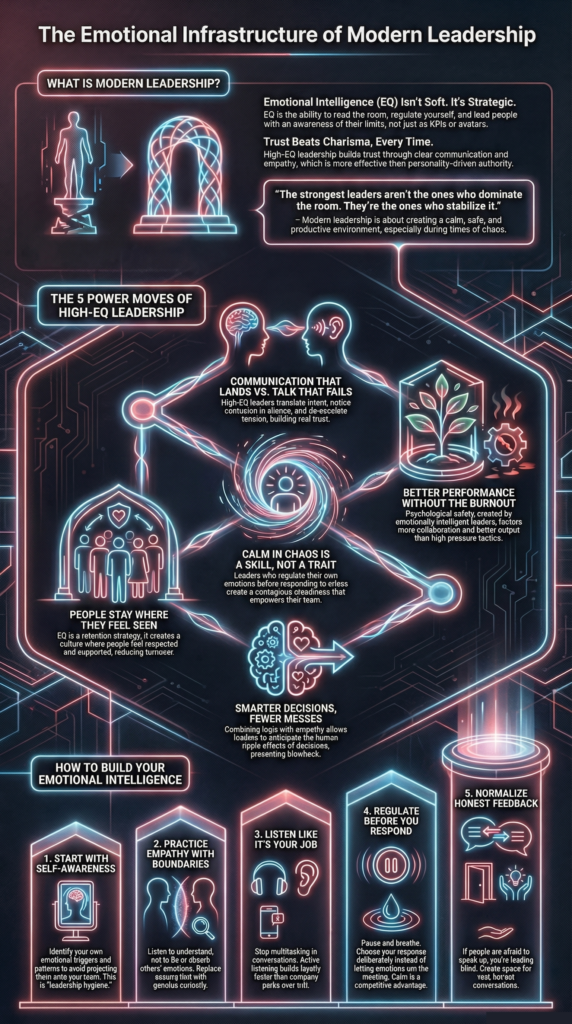
Infographic explaining the emotional infrastructure of modern leadership, outlining what emotional intelligence is, why trust beats charisma, the five power moves of high-EQ leaders, and practical steps to build emotional intelligence such as self-awareness, empathy with boundaries, active listening, emotional regulation, and honest feedback.

How to Build Emotional Intelligence Without Becoming a Therapist

Let’s keep this grounded.

1. Start With Self-Awareness (Yes, Really)

If you don’t know your own triggers, you’ll bleed them all over your team.

Notice your patterns.
What shuts you down? What fires you up?
What happens when you’re stressed?

Self-awareness is leadership hygiene.

2. Practice Empathy Without Over-Identifying

Empathy doesn’t mean absorbing everyone else’s emotions like a sponge.

It means listening to understand, not to fix.
It means curiosity instead of assumption.

You can care deeply and keep boundaries. That’s leadership maturity.

3. Listen Like It’s Your Job (Because It Is)

Stop multitasking during conversations.
Stop waiting for your turn to talk.

Active listening builds loyalty faster than perks ever will. People support leaders who make them feel heard, not managed.

4. Regulate Before You Respond

Leadership isn’t about never feeling emotional. It’s about not letting emotions run the meeting.

Pause. Breathe. Choose your response.

Calm leadership is a competitive advantage.

5. Normalize Feedback and Emotional Honesty

If people are scared to speak up, you’re flying blind.

Create space for real feedback. Invite conversation. Model emotional transparency without oversharing.

A team that can talk honestly will always outperform one that’s just “nice.”

Final Sip of Truth ☕

Emotional intelligence isn’t a “soft skill.”
It’s the infrastructure of modern leadership.

If you want resilient teams, sustainable growth, and fewer fires to put out, this is where the work is.

Lead with awareness. Lead with intention.
And remember: the strongest leaders aren’t the ones who dominate the room.

They’re the ones who stabilize it.

No sugar. Just caffeine and truth.

 
author avatar
Karen Hewitt CEO of Blossom To Success
Karen Hewitt is a Harvard-certified disruptive strategist, creator of the Identity-Led Archetypes™ and Disruptive Archetypes™ frameworks, and co-founder of Tea & Coffee Hub. As an AuDHD mom of five, she blends social media psychology, AI innovation, and emotionally intelligent strategy to help entrepreneurs build brands with soul, systems, and self-trust.